
Sony Interactive Entertainment is working on a tech for real-time “augmentation” in cross-platform multiplayer games. The tech could force the gaming industry to rethink what “fair” actually means when players on PC, consoles, and mobile come together in competitive multiplayer situations.
The patent published last year under the title “Cross-Platform Play with Real-Time Augmentation for Maintaining an Even Playing Field Between Players” (WO2025080482A1), flew under the radar at the time as focus remained to Sony filings about AI upscalers and Ghost Players.
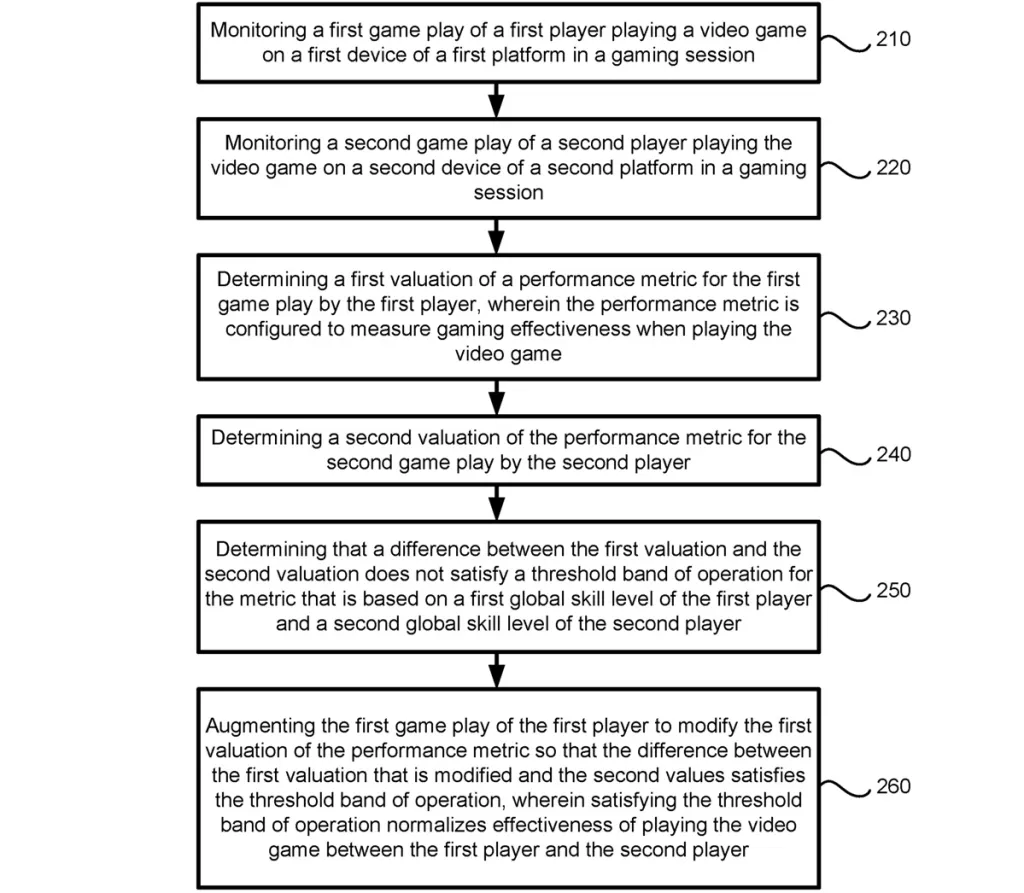
What Sony is proposing is straightforward but controversial. When a player on a different gaming device competes in the same MP session, the system constantly monitors their performance. If one player’s platform gives them a technical edge (or disadvantage), the game will make tweaks to bring everyone back within “a threshold band of operation” based on their global (platform-agnostic) skill level.
To put it simply, a system that auto nerfs.
From the patent itself:
Video games are played anywhere and at any time using various types of platforms, including gaming consoles, desktop computers, laptop computers, mobile phones, tablet computers, etc. When players are playing a video game in a multi-player mode, players playing on devices of one platform may have an advantage or disadvantage when interacting with the video game over players playing on devices of another platform.
It gives the classic example:
An input control tied to a command (e.g., accelerate an object) to be executed by the video game may include pushing a toggle forward on a hand held controller of the gaming console, but may be mapped to repeated swipes on a display of a mobile phone to achieve the same result… This introduces a technical disadvantage for the player using the mobile phone.
The fix is Augmentation, real-time assistance or adjustments applied only to the disadvantaged player:
Augmenting the first game play of the first player to modify the first valuation of the performance metric so that the difference between the first valuation that is modified and the second valuation satisfies the threshold band of operation. Satisfying the threshold band of operation normalizes effectiveness of playing the video game between the first player and the second player.
Point to note is that the system won’t blindly nerf the better performer. In fact, it will measure against each player’s global skill set (think MRR that ignores what device you’re on) and only comes into player when the gap exceeds what pure skill differences would explain. Now, to be honest this will be extremely tricky manage if this tech is ever actually used in video games.
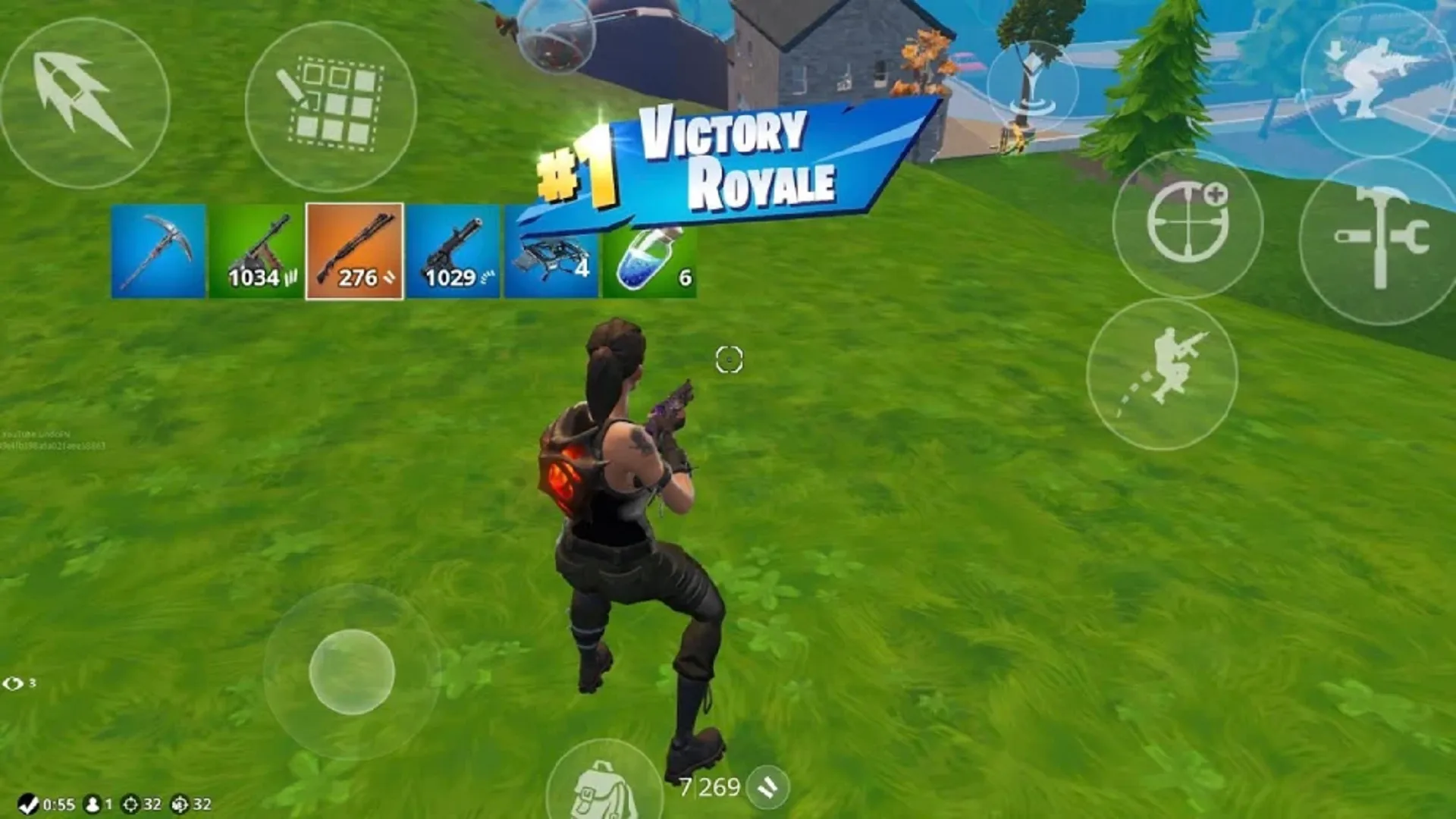
Thankfully, there are very few games that support full cross-play between PC, consoles, and mobile; Fortnite being one of them. But in games that do support cross-play with mobile devices, the situation is pretty simple.
A PS5 player with Dualsense controller has precise analog input, haptics, and even aim assist while the mobile player is fighting virtual joysticks and touch swipes. The patent is explicitly designed to close that gap without changing the underlying rules.
As the patent sums it up:
The effectiveness of playing a game by a player may be dependent on which platform that player is using… When the relative difference between effectiveness in game plays for two or more players is outside a threshold band of operation… augmentation and/or assistance is provided… In that manner, an even playing field between the players playing on devices of different platforms may be achieved.
The idea is technically ready but it is still just a parent at this point. Sony, as far as we know, has done nothing to implement this. In theory, it sounds like a great idea but actually keeping it fair, avoiding unfair nerfing if a player…just sucks at the game? Would be the tricky part.